
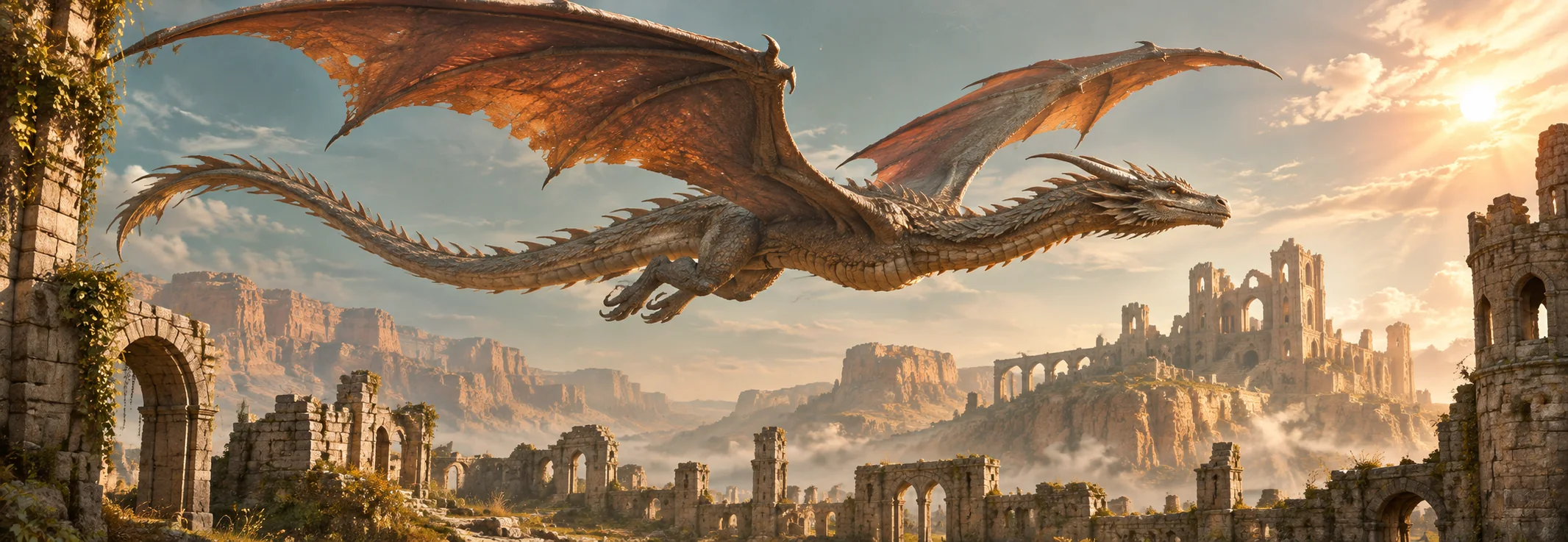
A tower catches the light on a ridge. There’s a footpath toward it, but no quest marker and no promise of loot. You take the path anyway. When you look back, the village you left is now a cluster of roofs below. The tower may turn out to be empty. The walk has already changed the way you understand the place.
That small sequence explains much of what makes open worlds work. A good detour lets you set a goal, decide how to reach it, and make sense of what you find. Designers can create the conditions for that experience with a distinct silhouette, a visible route, and a reason to pause when you arrive.
Give players landmarks they can remember
A crooked tower or a line of wind turbines can do more for navigation than another pin on the map. Seen from several places, a landmark helps you estimate distance and gives you a vocabulary for talking about the world. “Meet me by the broken bridge” becomes a useful instruction because everyone remembers seeing it.
Markers still have a job. They help players recover their bearings after a break and make complicated objectives easier to follow. The useful question is where they add clarity and where they interrupt the fun of figuring out a route.
Make the return trip worth taking
A bend in a path can hide a shortcut on the way out and make it obvious from the other direction. A dangerous stretch might become a regular route once you find a place to rest or work out when its patrol moves on. Revisiting familiar ground gives the player a chance to use knowledge they earned on the first trip.
It also gives quieter stretches a purpose. A few hundred metres of calm after a frantic fight let you take stock. You can listen, choose the next point on the horizon, or decide it’s time to head home. Those choices are part of the experience, even when the game has nothing new to put in your inventory.
Leave room for a story players can tell
In co-op, a detour can turn into a shared memory. One person spots a light through the trees. The others agree to look, and halfway there someone realises the sun is going down. When you talk about the session later, you remember the decision you made together and the route you improvised to get back.
Next time you’re exploring an open world, think about the last place you chose to visit on your own. What caught your eye? How did you get there? What made you glad you went? The answers describe how that world works from the player’s side.
Browse the latest dispatches